Health services in the Asir Region witnessed
01Health services in the Asir Region witnessed a major qualitative leap over many years, keeping pace with the tremendous health development at the level of the Kingdom as a whole.
Health services in the Asir Region witnessed a major qualitative leap over many years, keeping pace with the tremendous health development at the level of the Kingdom as a whole.
Health services in the Asir Region witnessed a major qualitative leap over many years, keeping pace with the tremendous health development at the level of the Kingdom as a whole. This qualitative leap included the public and private health sectors, so that they became parallel to their counterparts in developed countries, as the cities of Asir include many therapeutic institutions, and public and private hospitals, which arose as a result of economic abundance; This makes it distinguished by containing the best advanced medical equipment in the world, as well as the most qualified local and retired doctors.
Health workers in the Asir Region have made great efforts to achieve the general goals of a healthy society with healthy structures and bodies through prevention and treatment. From a health unit with one doctor, one nurse, and a servant in 1356 AH to a health delegation in 1362 AH, to the opening of the first hospital in the Asir Region in 1372 AH in the city of Abha, with a capacity of 15 beds in a rented mud building.
Health services in the Asir Region witnessed a major qualitative leap over many years, keeping pace with the tremendous health development at the level of the Kingdom as a whole.
This qualitative leap included the public and private health sectors, so that they became parallel to their counterparts in developed countries, as the cities of Asir include many therapeutic institutions, and public and private hospitals, which arose as a result of economic abundance; This makes it distinguished by containing the best advanced medical equipment in the world, as well as the most qualified local and retired doctors.
Health workers in the Asir Region have made great efforts to achieve the general goals of a healthy society with healthy structures and bodies through prevention and treatment. From a health unit with one doctor, one nurse, and a servant in 1356 AH to a health delegation in 1362 AH, to the opening of the first hospital in the Asir Region in 1372 AH in the city of Abha, with a capacity of 15 beds in a rented mud building.
In 1377 AH, the general hospital building was opened with a capacity of 50 beds, and later a rented building for communicable diseases with a capacity of 20 beds was added, and in 13778 A general hospital was established in the city of Bishah with a capacity of 15 beds. In 1383 AH, construction of a hospital began in the city of Khamis Mushait with a capacity of 50 beds.
In 1388 AH, the communicable diseases department was developed into the Chest and Fever Hospital.
In 1390, health services were provided through three hospitals in Abha and Bishah, and the Chest and Fever Hospital with a capacity of 84 beds, supported by 59 primary care centers. In 1393 AH, Khamis Mushait Hospital was operated, then Mahayil and Dahran Al Janub Hospital were operated in 1395 AH.
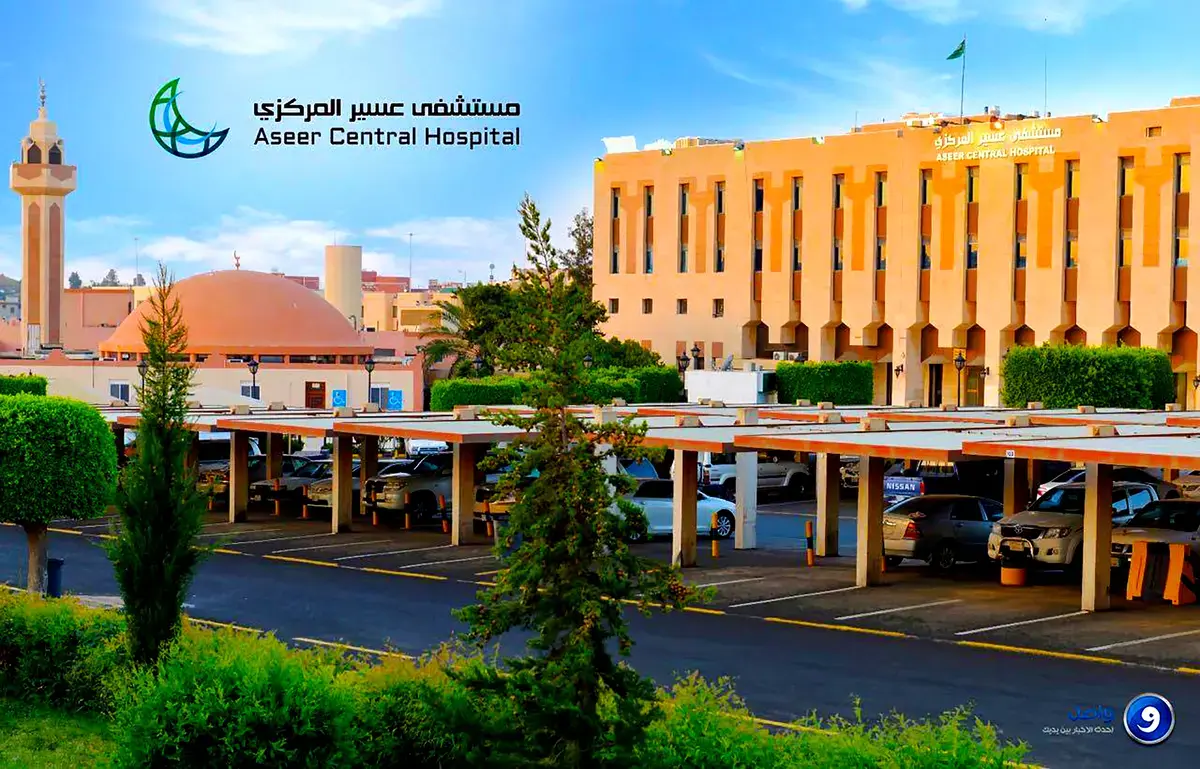
With the succession of five-year plans, Asir Region received a large share of health projects and an increase in the number of beds, health, medical and service equipment and care centres, in addition to three malaria health stations in Abha and Bishah and a schistosomiasis station in Abha, until the region now includes 20 hospitals with a capacity of more than 2,648 beds are: 1 – Abha General Hospital. 2 – Asir Central Hospital. 3 – Khamis Mushayat Hospital.
4 – Central Khamis Hospital. 5 – Psychiatric Hospital. 6 – Chest Diseases and Fever Hospital.
7 – Ahad Rafidah Hospital. 8 – Rijal Almaa Hospital. 9 – Mahayil Hospital. 10 - Prince Abdullah bin Abdulaziz Hospital in Bishah. 11 – Bishah General Hospital. 12 – Dhahran Al Janub Hospital. 13 – Ballasmar Hospital. 14 – Al Majardah Hospital. 15 - Sarat Abidah Hospital. 16 – Al Namas Hospital. 17 – Tathlith Hospital. 18 Sabt Alaya Hospital. 19 - Security Forces Hospital. 20 - Armed Forces Hospital.
There are a number of hospitals under construction: 1- A hospital in Khamis Mushayat with a capacity of (150) beds.
2- A hospital in the city of Muhayil Asir with a capacity of (150). 3- Al Farshah Hospital, with a capacity of (50) beds. 4- Al-Mada Hospital (50 beds). 5- A hospital in Lahmar with a capacity of (50) beds. 6- Al Harajah Hospital, with a capacity of (50) beds.
In addition to these hospitals, there are 280 health centers for primary care, in addition to health care programs, comprehensive prevention and vaccination against epidemic diseases, monitoring markets, public places and foodstuffs, forming mobile medical teams that reach remote places in the region, and carrying out work to combat endemic diseases and disease vectors in the field of malaria, and in the field of schistosomiasis through early diagnosis and treatment, and examination of water sources, and in the field of leishmaniasis by cordoning off cases and early detection of them.
The development processes were not limited to quantity only, but included quality, as new departments were created such as the industrial college, departments for underdeveloped children ((pasteurizers)), and burn treatment departments, in addition to the development of many supporting services such as: 1 - Specialized dental center. 2- Center for Chemistry and Forensic Medicine. 3- Kidney Center 4- Anti-smoking clinic 5- A clinic for diabetics.
6 - The Forensic Medical Committee. 7 - The Supreme Medical Commission.
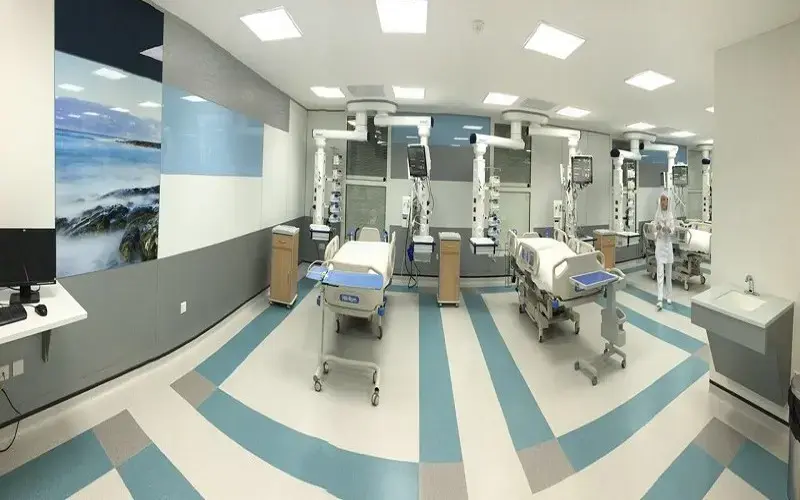
8 - Two colleges of health sciences, one for boys and the other for girls, to provide trained national health personnel. 9 - Medical printing presses. 10- Establishing warehouses for medical supplies. 11- Construction of the outpatient clinics building at Rijal Almaa Hospital. 12- Supply and installation of an MRI device at Asir Central Hospital. This device is considered one of the latest devices and has had a significant impact on diagnosis.
13- Installation of a lithotripsy device at Asir Central Hospital.
14- Installation of an arteriography device in Asir Central Hospital. 15- Installation of a cardiac catheterization device at Asir Central Hospital.
It was also agreed with King Faisal Specialist Hospital and Research Center to provide distinguished medical services to citizens in the region similar to the services provided in the Specialized Hospital, in addition to forming medical teams at Asir Central Hospital capable of dealing quickly and directly with cases referred to the Specialized Hospital.
It was also agreed with the Cardiology Department at the Armed Forces Hospital in the Southern Region to refer cases that need heart surgery to it.
The Magnetic Pulmonary Radiology (MRI) Department was also created, which is considered one of the most advanced medical devices, and a Ultrasound, and modern diagnostic devices such as
CT scan (CTScan), and nuclear medicine, in addition to ongoing health awareness campaigns that aim to push people to pay individual and family attention to health care through prevention, adherence to vaccinations, and staying away from pathogens and anything that harms public health.
There are also more than 77 private hospitals, dispensaries, and specialized medical centers, in addition to complex clinics, private clinics, pharmacies, drug supply warehouses, laboratories, and eyeglasses stores spread throughout the region. The most important of these hospitals are: 1- Abha Private Hospital. 2 - Saudi German Hospital. 3- Al-Rahma Hospital. 4 - Al-Ahli Hospital in Al-Khamis. 5 - Al-Watan Hospital. 6- Toson Hospital. 7 - Ghassan Pharaoh Hospital.