Agriculture

Agriculture

As a result of the abundance of rain, the Asir Region is rich in plants that humans have nothing to do with their cultivation, such as various trees, forest forests, and herbs.

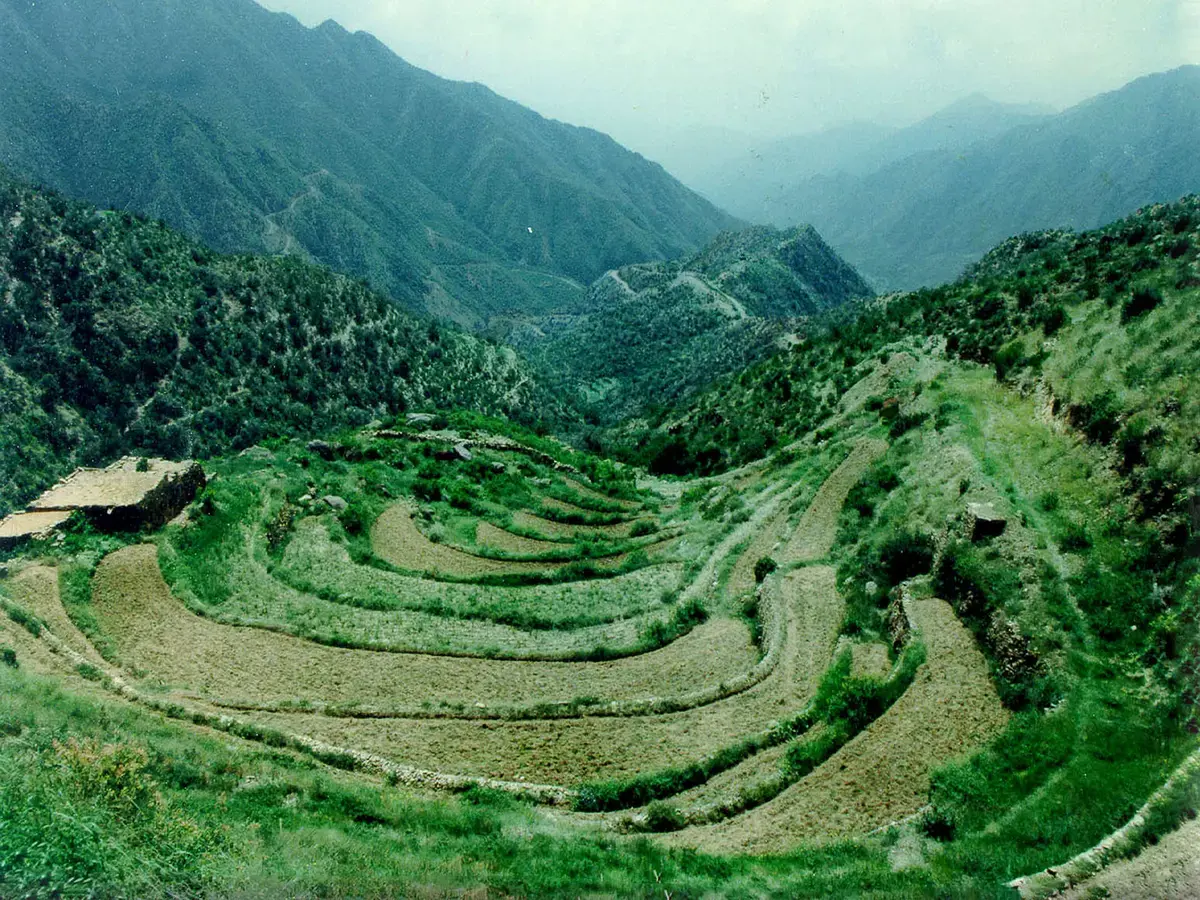
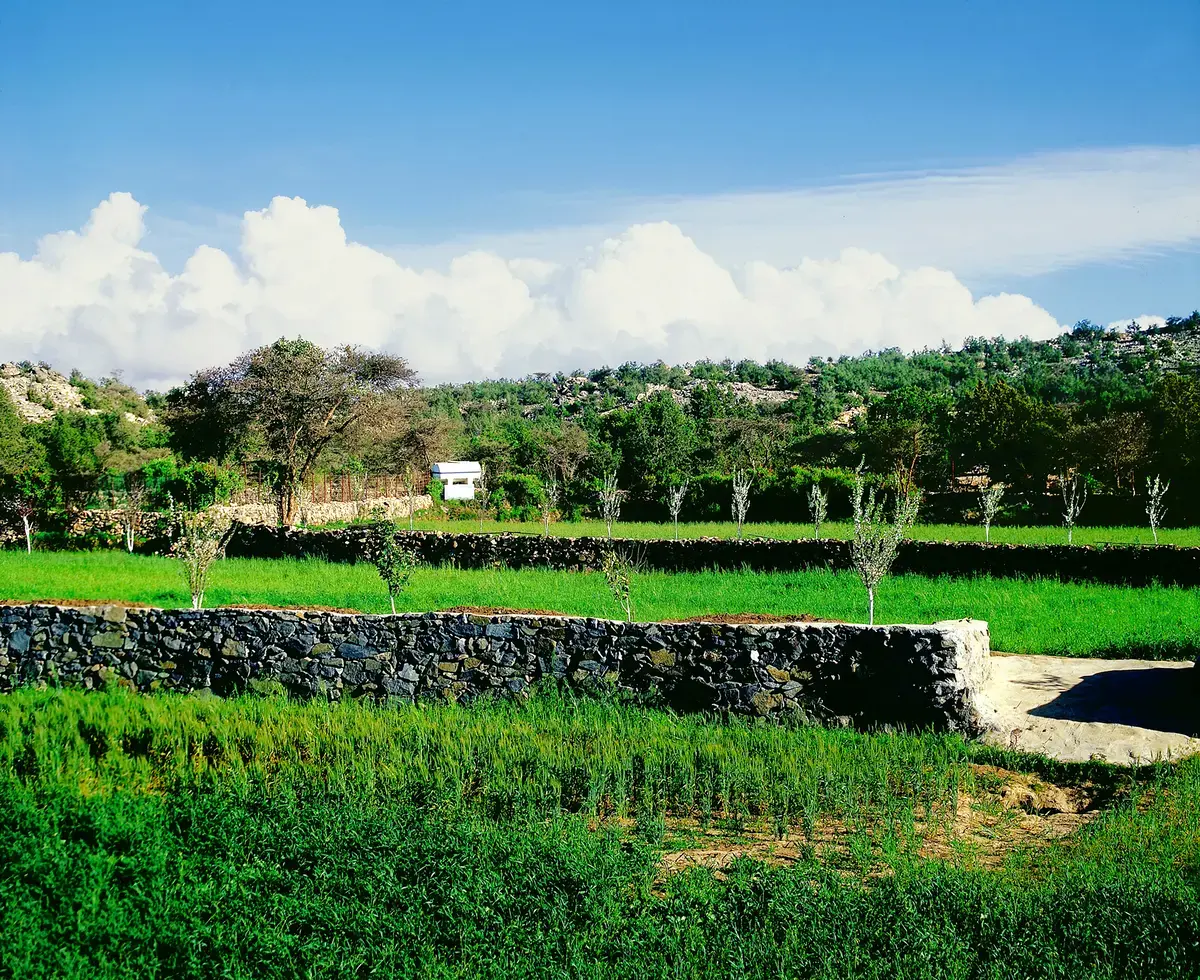
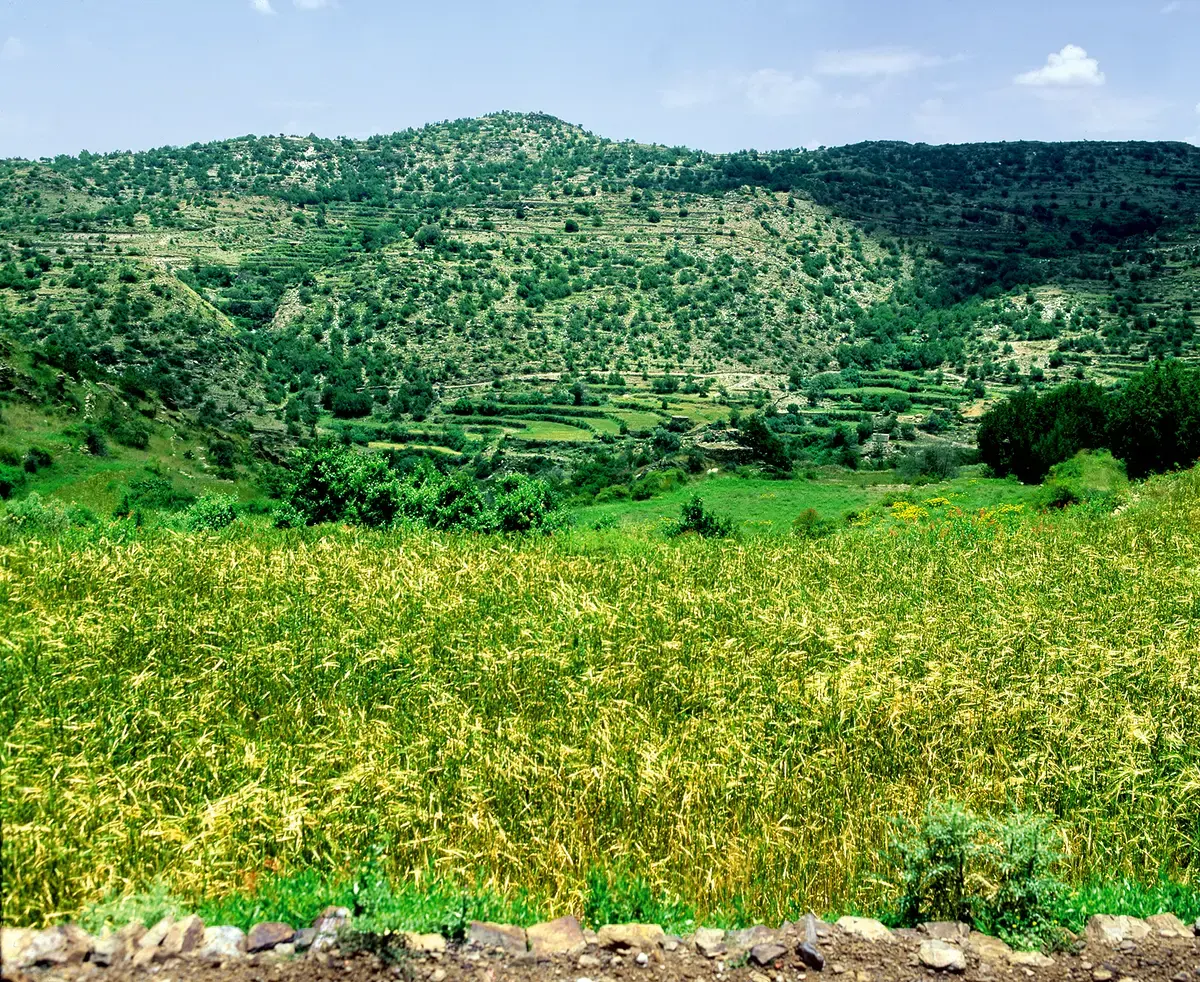
As a result of the abundance of rain, the Asir Region is rich in plants that humans have nothing to do with their cultivation, such as various trees, forest forests, and herbs. While the people of this region benefited from its geography and the variation in its climate, they turned to agriculture and livestock raising. He adapted nature, where the mountains were reclaimed and turned into arable land. He built agricultural terraces on the slopes of the mountains, which became a landmark in the Asir Region, and dug wells everywhere despite the ruggedness.

The terrain of the area was covered with primitive tools and in rugged mountainous places. How to reclaim mountains for agriculture The method of reclaiming mountains for agriculture, known as agricultural terraces, was carried out in several stages: The first stage: The mountain to be reclaimed is identified and prepared for agriculture, as it must contain stones that are fragile and easy to dismantle.

1Sections
6Images
5075Characters
عسيرCategory

Agriculture

As a result of the abundance of

01

As a result of the abundance of rain, the Asir Region is rich in plants that humans have nothing to do with their cultivation, such as various trees, forest forests, and herbs. While the people of this region benefited from its geography and the variation in its climate, they turned to agriculture and livestock raising. He adapted nature, where the mountains were reclaimed and turned into arable land.

He built agricultural terraces on the slopes

02

He built agricultural terraces on the slopes of the mountains, which became a landmark in the Asir Region, and dug wells everywhere despite the ruggedness. The terrain of the area was covered with primitive tools and in rugged mountainous places.

How to reclaim mountains for agriculture The

03

How to reclaim mountains for agriculture The method of reclaiming mountains for agriculture, known as agricultural terraces, was carried out in several stages: The first stage: The mountain to be reclaimed is identified and prepared for agriculture, as it must contain stones that are fragile and easy to dismantle.

The second stage

04

The second stage: The mountain is excavated in the form of terraces that take the shape of an open crescent to the top, and the excavation process relies on barricades made of iron for this purpose. The third stage: getting rid of small and large stones and leveling the ground. The fourth stage: This is the most Asir, as the soil is chosen that must be transported by livestock to the place to be reclaimed and cultivated.

The soil is not chosen randomly, but

05

The soil is not chosen randomly, but according to certain specifications, including that it be made of porous clay, then the red Ramla clay from which pottery is made is added. The fifth stage: The land is leveled, then plowed by animals with a wooden plow equipped at the end with a piece of iron called a tow, through which the soil is stirred and mixed together with the addition of organic fertilizers sourced from animals.

Then the land is seeded and covered

06

Then the land is seeded and covered with a mulch, which is a heavy, rectangular piece of wood dragged by animals and left until God brings relief with rain. Agriculture in mountainous areas ((agricultural terraces)) is one of the most Asir crops and its production is low. Because it is grown in terraces with small areas and depends on rain for irrigation, this cultivation is still applied to this day.

The agricultural areas in Asir are concentrated

07

The agricultural areas in Asir are concentrated in particular around the valleys, in the plains, and on the Tihami coasts, as the fertile soil and the intensity of rain and water are all factors that help agriculture, and the variation in climate in the region has contributed to the variation in agricultural crops.

We see the mountainous areas and plains

08

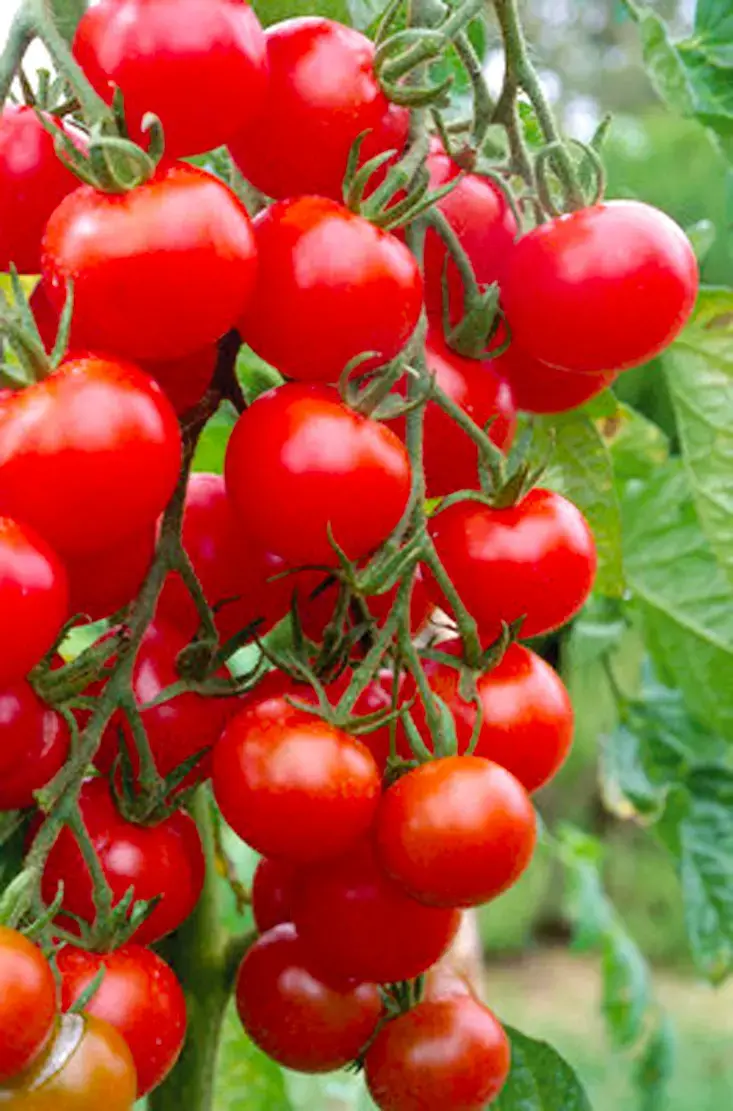
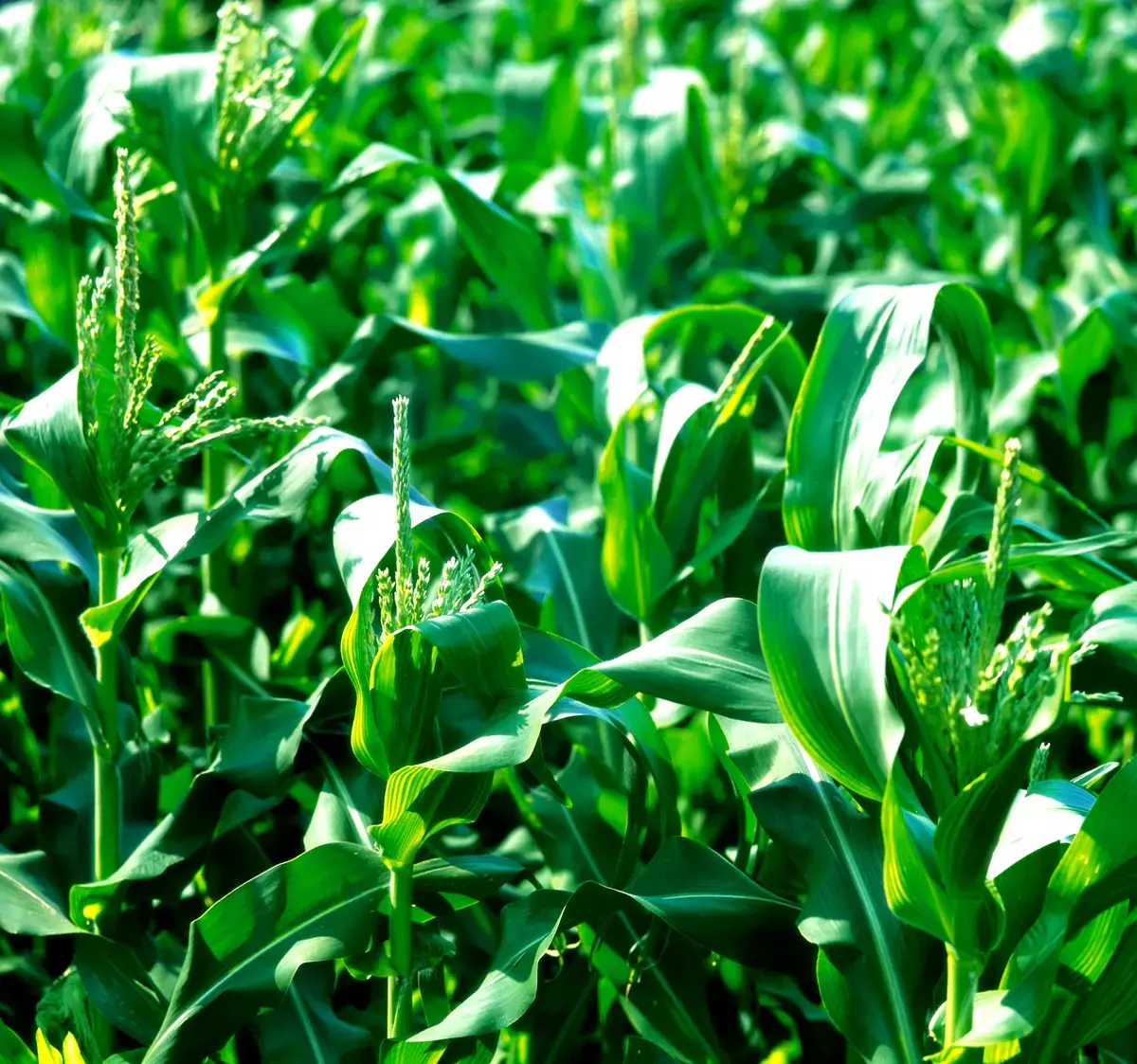
We see the mountainous areas and plains in Asir planting and producing what is suitable for the cold and moderate climate, such as wheat, corn, barley, lentils, fruits, and vegetables, and we find the coasts growing what is suitable for the hot climate, such as sesame, corn, and others. In addition to the possibility of repeating planting and harvesting two or three times a year.

Agriculture in the Asir Region has witnessed

09

Agriculture in the Asir Region has witnessed a significant and noticeable development despite the scarcity of arable areas of land, as there are small areas scattered between the slopes of the mountains in the form of terraces, in addition to larger areas in the areas of the inland and coastal plains. This is agriculture that depends mainly on the rain that falls in the region, and on the local water reserve.

The many dams that were established as

10

The many dams that were established as part of development plans have contributed to expanding the area of ​​cultivated land. The crops grown in Asir include grains, vegetables, and fruit trees that can adapt to the prevailing climate. There are ambitious plans to expand agriculture as it is one of the basic economic activities for the region’s residents since long periods of time, especially with the spread of the use of modern technologies in agriculture.

The agricultural products in Asir are distinguished

11

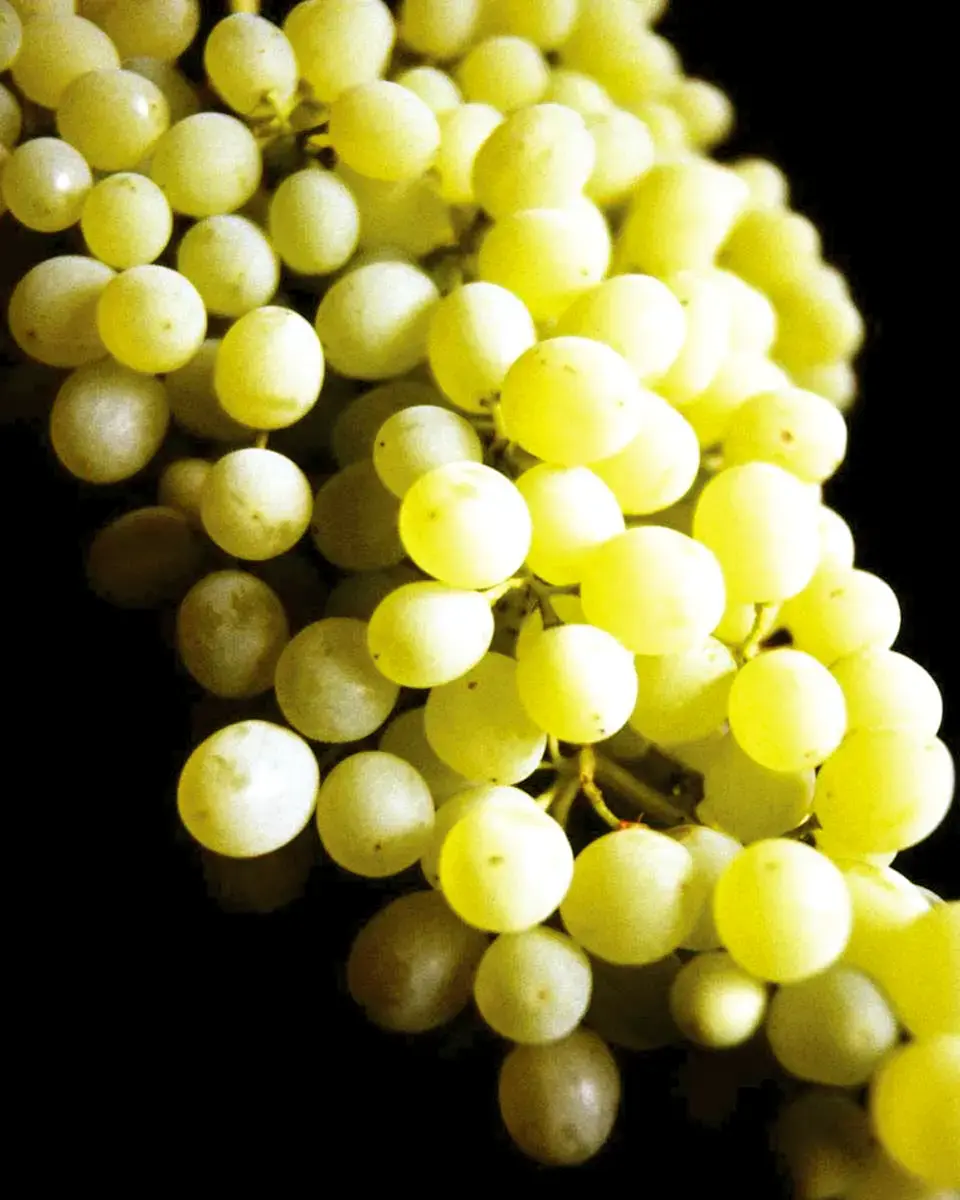
The agricultural products in Asir are distinguished by their good quality, special taste, and delicious flavour, especially the fruits for which the region is famous, such as pomegranates, grapes, and prickly pear (parseam), in addition to other types that have begun to spread and prove successful, such as Apricots, peaches, apples, almonds, bakhara, etc. There are also excellent types of dates in some areas, such as the Bishah region.

Olive cultivation is now being expanded, which

12

Olive cultivation is now being expanded, which can achieve good results in mountainous areas and plains alike. The area of ​​cultivated land in the region was estimated at approximately 16,238 hectares, or the equivalent of 0.8% of the total area of ​​cultivated land in the Kingdom. The area of ​​arable land in the region was estimated at approximately 748,643 hectares, representing 2.4% of the area of ​​arable land in the Kingdom.

Through the local production in the region

13

Through the local production in the region of some selected agricultural products in 1422 AH, the fruit crop came in first place in terms of production quantity, which amounted to about 78.7 thousand tons, and the vegetable crop reached 53.7 thousand tons. This was followed by the date crop, where production was estimated at about 46.9 thousand tons. The fodder crop came in fourth place, where production was estimated at about 39.6 thousand tons.

Finally came the grain crop, where production

14

Finally came the grain crop, where production is estimated at about 31.9 thousand tons. The development of agricultural production in the region also led to an increase in animal products during the year 1422 AH, as chicken production reached about 47 million broilers, and the number of eggs produced was about 65 million eggs through 4 specialized projects.

The number of sheep reached about 717.4 thousand heads, and the quantities of honey produced amounted to about 22,841 kg through 274 farms.

The average rainfall rate in the Asir

15

The average rainfall rate in the Asir Region reaches 500 mm annually, which is a high percentage, but it is characterized by abundance, and because it is seasonal, the government of the Kingdom of Saudi Arabia intended to benefit from this rain and the resulting torrents in a sound manner by constructing many dams.

In the year 1394 AH, the Custodian

16

In the year 1394 AH, the Custodian of the Two Holy Mosques, King Fahd bin Abdulaziz - may God protect him - opened the Abha Dam, and then the construction of dams continued until it reached 111 dams in the Asir Region, and the King Fahd Dam in Bishah, which was opened by His Highness Crown Prince Abdullah bin Abdulaziz, is considered the largest concrete dam on a dry valley in the Middle

East, with a storage capacity of 325 tons, with the aim of raising the level of water reserves in springs and wells that feed the regions by increasing the general groundwater reserve.

These dams have contributed to stimulating agricultural

17

These dams have contributed to stimulating agricultural and tourism movement in nearby locations, and in a parallel line to construct the dams, 361 wells were drilled equipped with With modern networks to meet the water needs of rural areas.

Category: عسير